


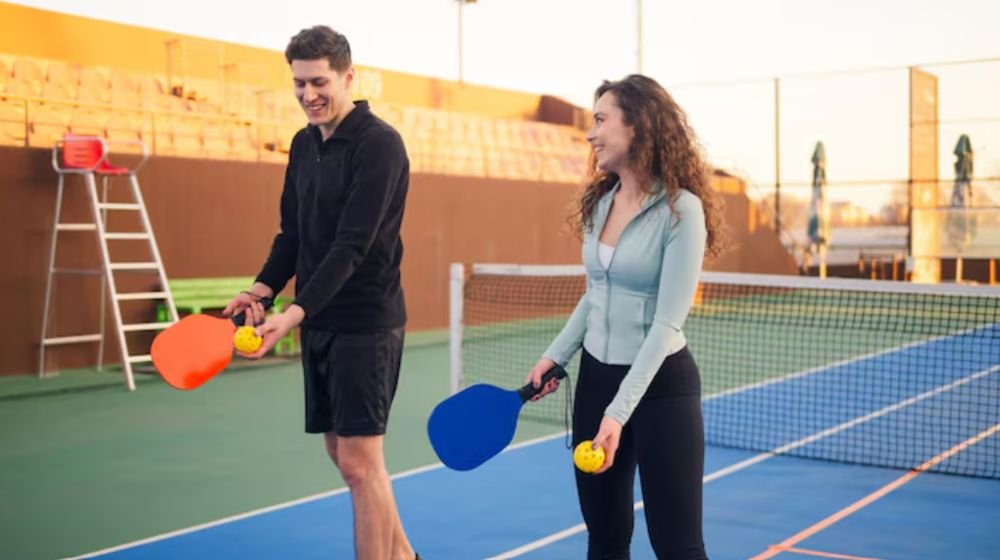
How to Start Playing Pickleball: A Beginner’s Roadmap
Pickleball has rapidly transformed from a niche activity into one of the fastest-growing sports globally. Combining the tactical depth of tennis, the agility of badminton, and the quick reflexes of ping-pong, it offers an accessible yet challenging experience for players of all ages.
Whether you are looking for a new fitness outlet or a vibrant social community, this roadmap will guide you from your first paddle purchase to your first winning rally.
Understanding the Game
The beauty of pickleball lies in its simplicity . It is played on a court measuring 20 by 44 feet—roughly one-third the size of a tennis court—making it much easier to cover for beginners and those seeking a low-impact sport.
The net is slightly lower than a tennis net, hung at 36 inches on the ends and dropping to 34 inches at the center. Players use solid paddles to hit a perforated plastic ball, which moves slower and bounces less than a tennis ball, allowing for longer, more strategic rallies.
Court quality also affects safety and playability. Since many pickleball courts are adapted from existing tennis courts, players should notice surface cracks, uneven bounce, or slippery patches. Similar signs can also show when a tennis court needs a new surface, especially if the court is used often for recreational play.
Essential Gear for New Players
One of the best aspects of starting pickleball is the minimal entry cost. To get started, you only need three core items:
- The Paddle: Beginner paddles are typically made from lightweight composite materials like graphite or fiberglass, which offer a balance of power and control.New players should compare weight, grip size, paddle shape, and comfort before buying. Brands like Joola are frequently recommended for their ergonomic comfort and forgiving sweet spots.
- The Ball: Pickleball balls are plastic and perforated. It is important to choose the right type: indoor balls are softer with larger holes, while outdoor balls are harder and more durable to withstand wind and rougher court surfaces.
- Footwear: Do not overlook your shoes. Standard running shoes often lack the necessary lateral support for the side-to-side movements required on the court. Investing in dedicated court shoes can help prevent slips and common injuries.
Mastering the Basics
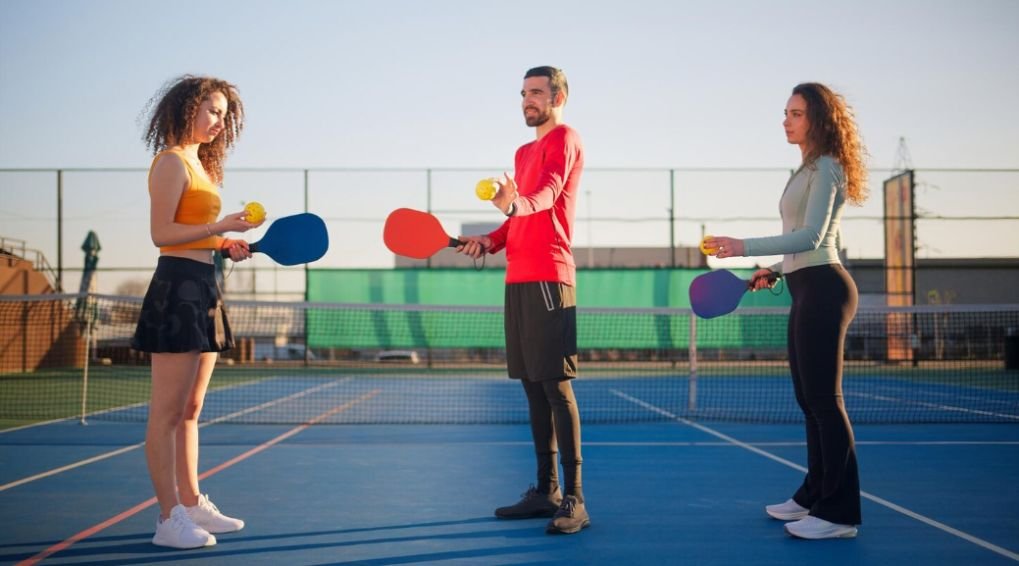
While the sport is easy to learn, mastering the fundamental pickleball rules is essential for a smooth start.Every point begins with an underhand serve made diagonally across the court. Unlike tennis, you only get one serve attempt unless the ball hits the net and still lands in the correct box (a “let”).
Beginners should also focus on control before power. A comfortable paddle can make serving, returning, and soft shots easier to manage, so learning to choose the perfect pickleball paddle can support better early progress on the court.
One unique feature is the “Two-Bounce Rule”: both the receiving team and the serving team must let the ball bounce once on their side before they can begin volleying the ball out of the air.
Furthermore, players must respect the “Kitchen,” or the non-volley zone extending seven feet from the net on both sides. You cannot hit the ball while standing in this zone unless it has already bounced, a rule designed to prevent dominant smashing near the net.
Scoring and Strategy
Scoring can initially feel like the trickiest part of the game. Points are only scored by the serving team, and games are typically played to 11 points, with a requirement to win by two.
In doubles, the score is announced as three numbers: the serving team’s score, the receiving team’s score, and whether the server is the first or second player on the team.
To improve quickly, focus on placement rather than power. Mastering the “dink“—a soft, controlled shot into the opponent’s kitchen—is a vital skill that forces your opponent into making errors.
Joining the Community
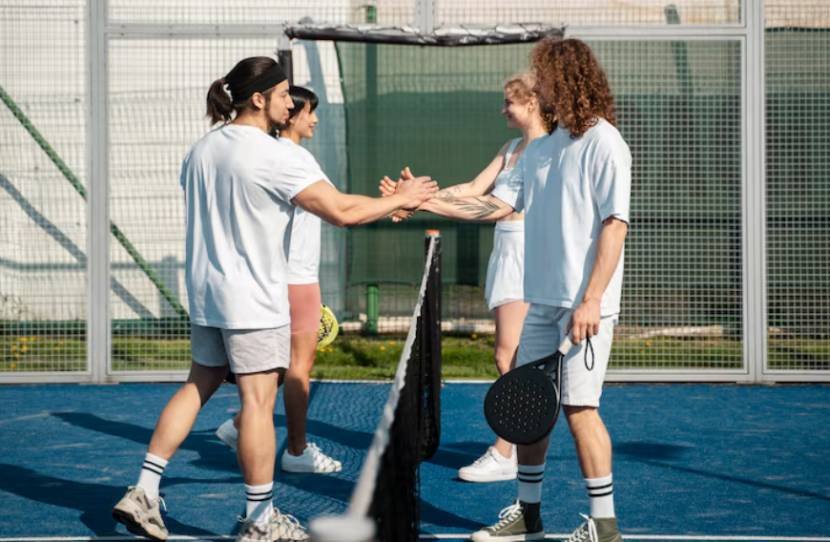
Pickleball thrives on its social culture. Many local courts offer “open play” sessions where players of various skill levels rotate in and out of games.
This inclusive atmosphere makes it easy to find partners and learn through experience. Professionals like Chris Siebeneck even cite the social and travel aspects of the sport as a primary draw.
By focusing on consistency, learning the unique court boundaries, and engaging with the community, you will find yourself progressing from a novice to a confident player in no time. Grab a paddle, find a local court, and start your journey into the world of pickleball today.